
A syrenka swam from the Baltic Sea and up the Vistula River. On the banks of a small fishing village, she paused to rest and play. Her presence drew the attention of local fishermen, who noticed something in the water stirring up waves, tangling nets, and releasing their catch. Intending to trap the meddlesome offender, they were astonished to find a maiden with the tail of a fish. Upon hearing her sing, they became so enchanted, that any plans of punishment immediately dissipated. A while later, a rich merchant, seeing the potential to make a profit, captured the mermaid and locked her in a cabin. The fishermen, picking up on her cries, rallied to the rescue, whereupon the mermaid vowed that she would be ready to repay the favor whenever it should be needed. Since then, with shield and sword in hand, she has watched over the village, Warsaw, as its guardian and protectress.
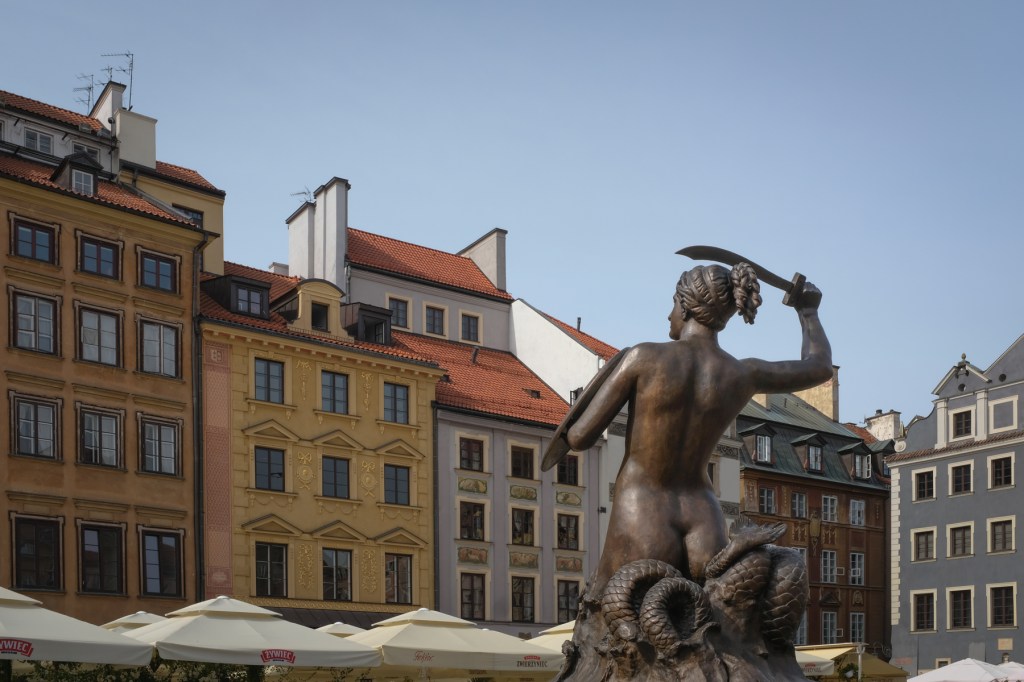
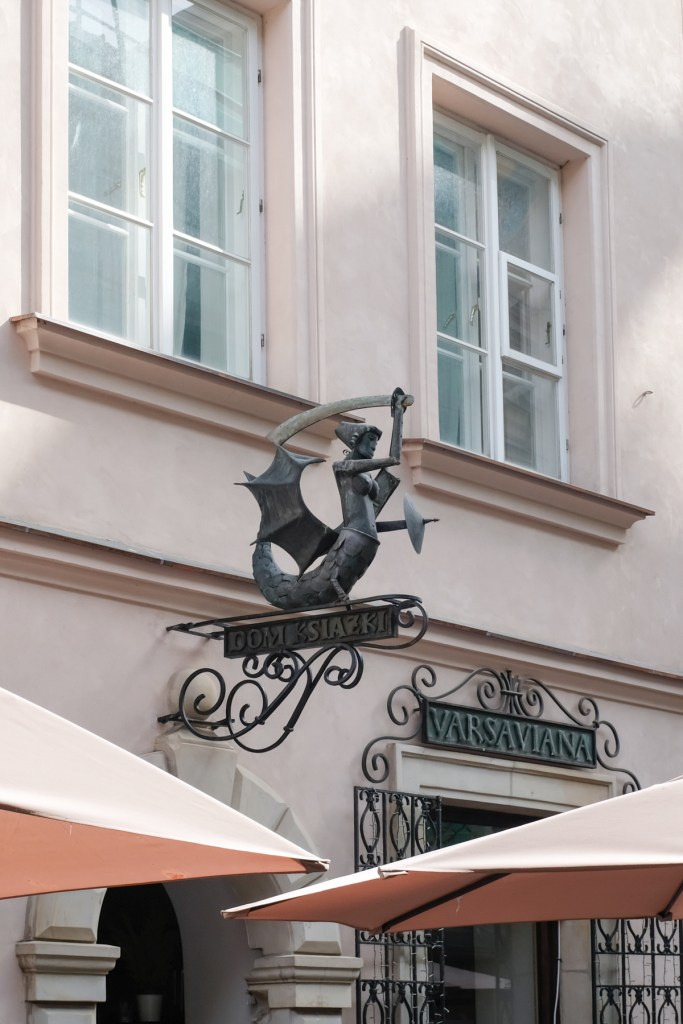
During the time when Warsaw was under the rule of the Russian Empire, the mermaid emblem was officially banned. Nevertheless, that didn’t stop defiant Varsovians from placing images of their syrenka around the city. Today, mermaids adorn Poland’s capital, from its coat of arms to clock faces and shop signs. The most famous of them is the bronze centerpiece of the Old Town Market Square, in one of the most picturesque spots of the city. A whirlpool of pastel tenement houses, cafés, and restaurants circles the little mermaid as she takes a battle stance amidst mouthwatering displays of plump Polish pierogi, sour żurek, and traditional potato pancakes. She has good reason to be in arms. Since the days of her vow, Warsaw has had a turbulent history marked by invasions, plagues, and fires. Less than a century ago, here was nothing but rubble.




Warsaw has the newest Old Town in the world. The historic quarter was badly damaged during the Invasion of Poland in 1939. By 1944, Nazi troops had razed more than 85 percent of the city core to the ground. After the Second World War, extraordinary efforts were undertaken to resurrect Old Warsaw. The Market Square and its adjacent areas are a near-total reconstruction of the town’s original late 18th-century appearance. The faithfulness and accuracy of this restoration led to the inclusion of Warsaw’s Old Town as a UNESCO World Heritage site.
The story of Warsaw spans over a thousand years. From a small fishing village, it grew to become the seat of one of Europe’s major powers, the Polish–Lithuanian Commonwealth. At its largest territorial extent in the early 17th century, the Commonwealth was one of the biggest and most populous countries in Europe. Its collapse in the late 18th century and the partition of its lands between Austria, Russia, and Prussia (an earlier German state) wiped both independent Poland and Lithuania off the map for 123 years. After the fall of Napoleon, Europe’s national boundaries were redrawn, and roughly 80 percent of the pre-1722 Commonwealth territory was incorporated into the Russian Empire.
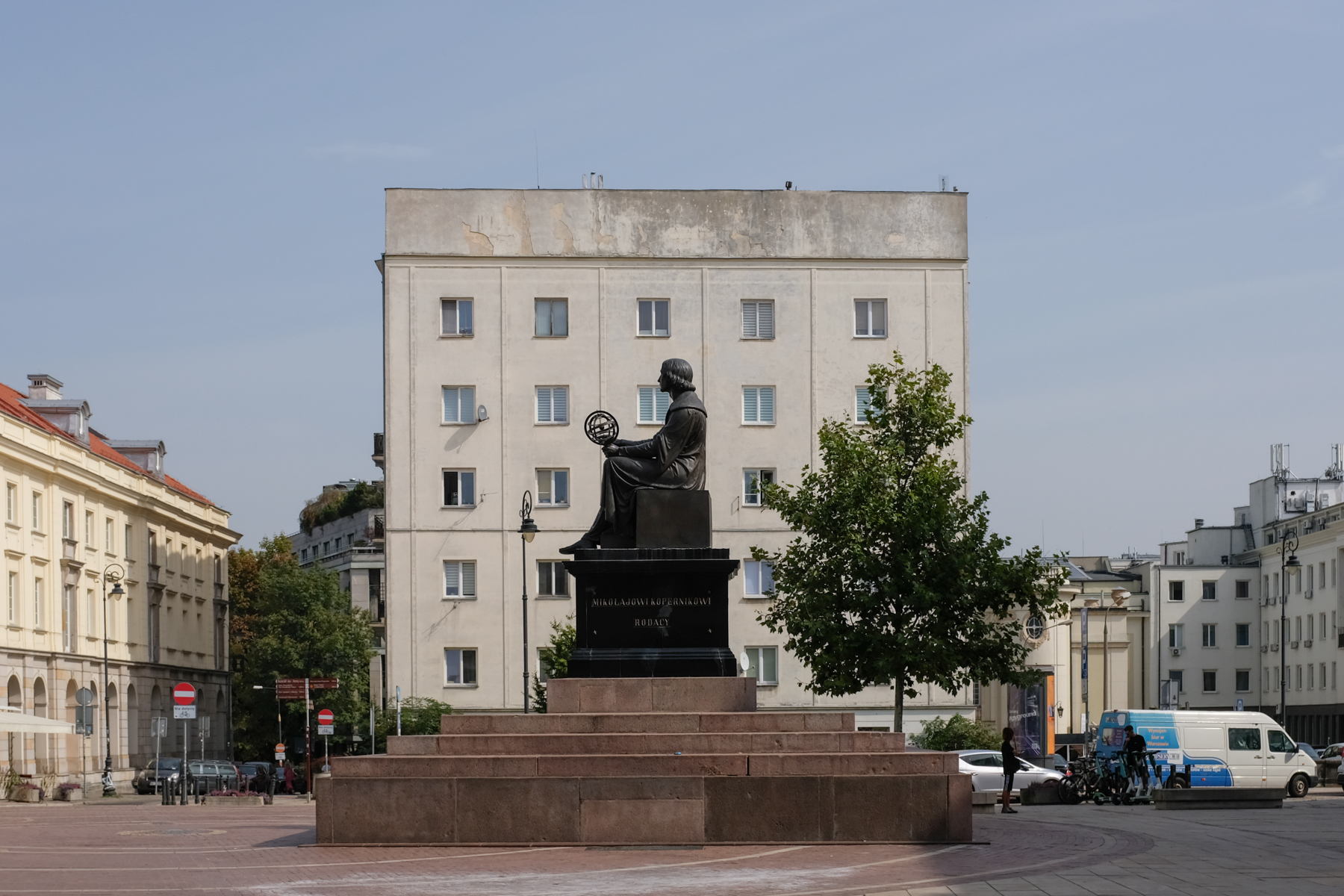
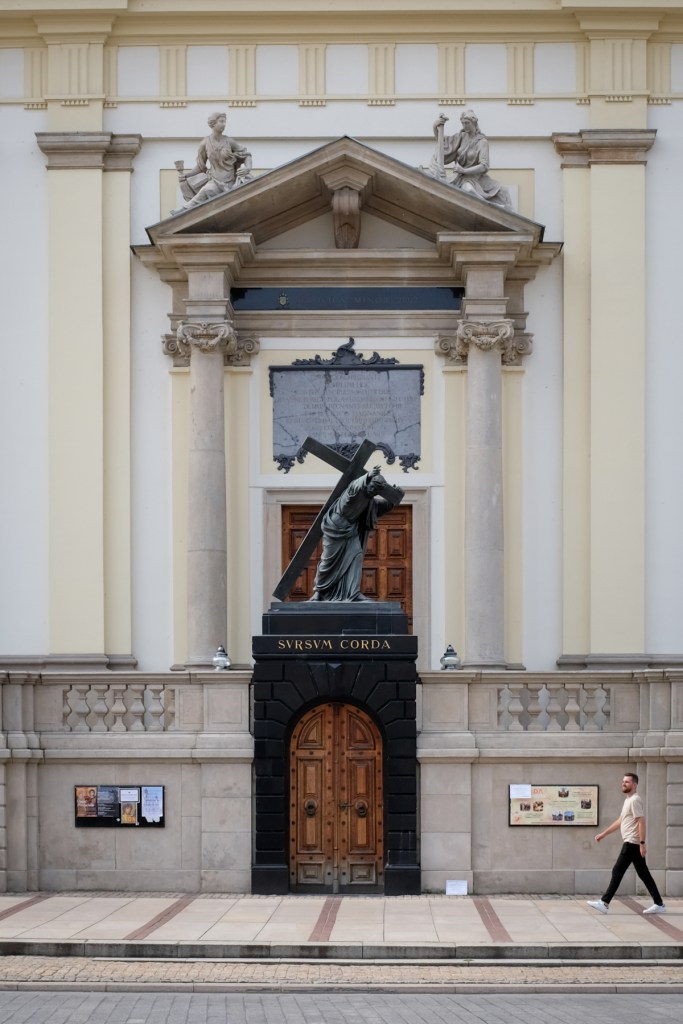
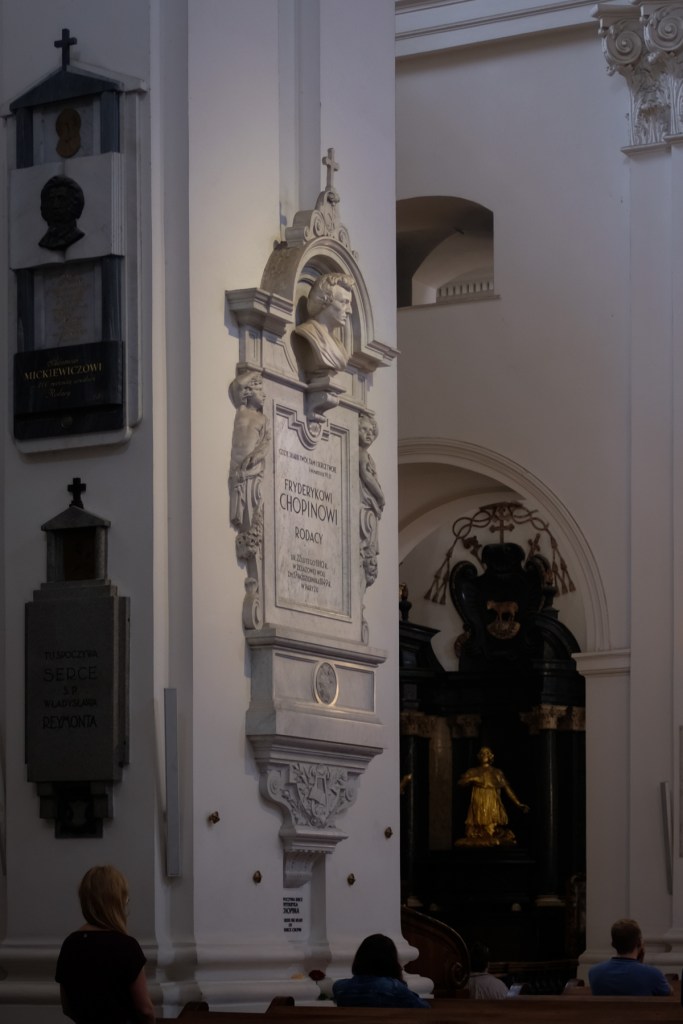
Along the sprawling Royal Route linking Old Warsaw to the Versaillesque Wilanów Palace are homages to some of Europe’s most illustrious minds: to Copernicus, whose model of the universe placed the sun instead of Earth at its center, and who lived his entire life in what is now present-day Poland; and to Chopin, who grew up in Warsaw and whose heart lies in the city—literally. On his deathbed in Paris, the virtuoso pianist expressed his desire to have his heart laid to rest in his homeland. His sister, Ludwika, fulfilled the request, sneaking the organ back to Warsaw in a jar of cognac. Today, the urn containing Chopin’s heart is interred in the Church of the Holy Cross, within a pillar on the left nave.
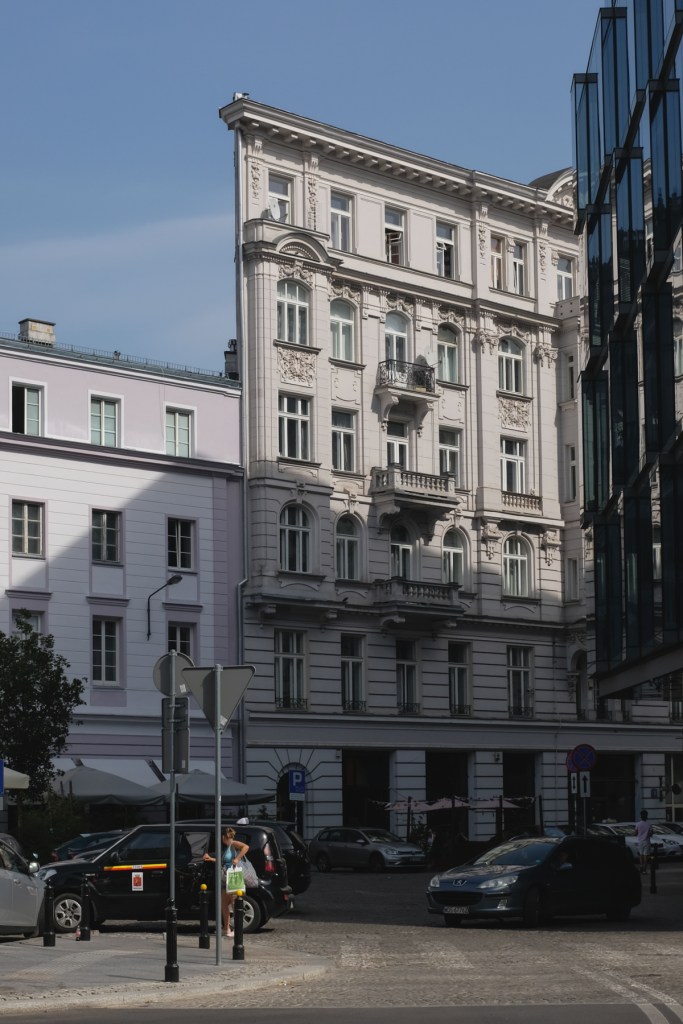
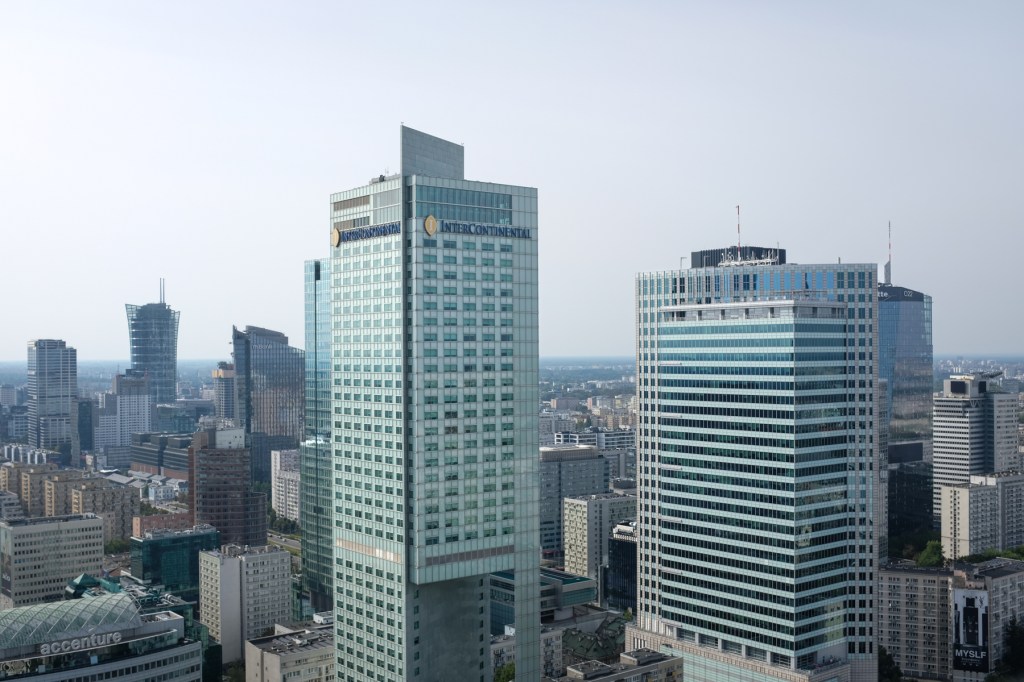
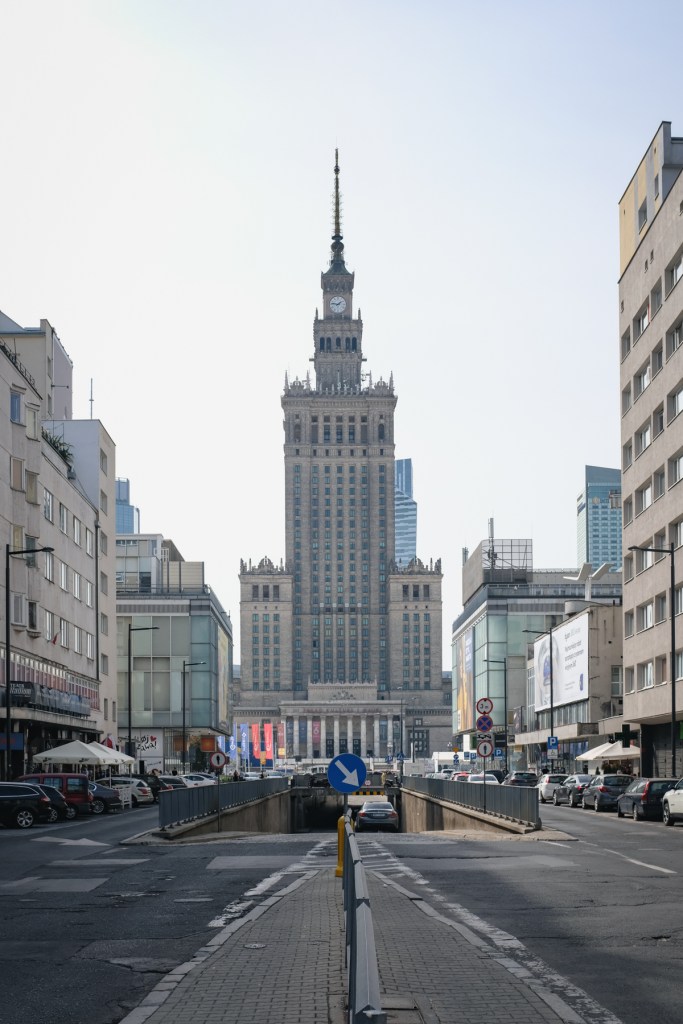
Beyond the core of Old Warsaw, the building façades begin to lose their colorful blushes of roses and lilacs, giving in to glummer shades of worn-out sepia and eggshell gray, until they too recede under the shadows of a bustling commercial area. Modern Warsaw pulsates with life. At sundown, the streets are lit by scores of illuminated glass buildings: the sail-like Złota 44, designed by renowned Polish-American architect Daniel Libeskind; Varso Place, the tallest building in the European Union; and the InterContinental Warsaw, Poland’s loftiest hotel. Among the field of skyscrapers is the Palace of Culture and Science. Looming above the landscape like an emperor, it is imposing both in stature and in solemnity. The building is a controversial symbol. Bestowed to Varsovians by the Soviet Union in the 1950s, there are Poles today who call for the demolition of this colossal communist vestige. The tiered high rise is a classic example of Stalinist architecture, a stern and intimidating style which borrows elements from the art deco movement, hence its conspicuous resemblance to Manhattan’s Empire State Building.



A mile away on Chłodna Street and wedged between two functionalist cubes of brick and concrete is the Keret House, the narrowest house in the world. No wider than a pair of outstretched arms, the windowless sliver of a residence contains a bedroom, bathroom, kitchenette and attic stacked over three levels. Constructed as a modern-day Holocaust memorial, it is an allusion to the secret annexes and cramped hideouts used by Jews during the Second World War. The location of the Keret House is also steeped in significance. During the war, Chłodna connected the two parts of Warsaw’s enclosed Jewish ghetto. A footbridge above the street was the only place where confined Jews could peek over the ghetto walls and catch a glimmer of the world outside.
From the bridge, you can see the “Aryan” Warsaw, to us seemingly so free. But such small pleasures are not allowed. The policemen on the bridge politely but firmly ask you not to stare and to keep moving.
Henryk Makower, Jewish physician and microbiologist


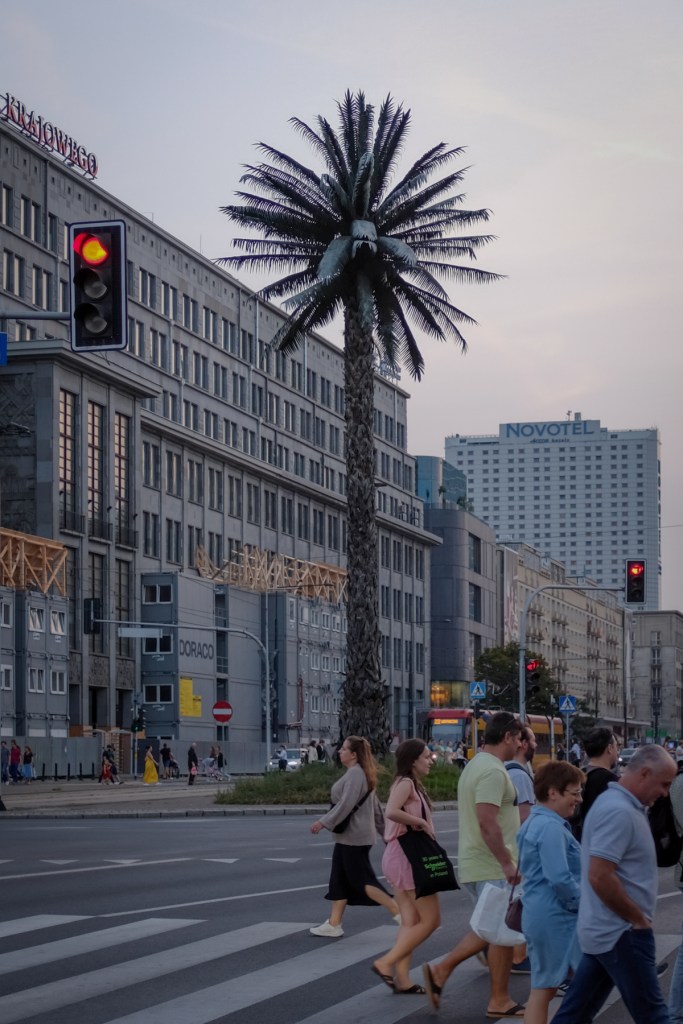
On Jerusalem Avenue, a life-size replica of a date palm is an acknowledgement of the absence of the Jewish community in today’s Poland. At the turn of the 20th century, the country was home to Europe’s largest population of Jews, and in Warsaw, roughly 30 percent of residents were Jewish. Following Poland’s independence after the First World War, Jews were regarded as a national minority and even had representation in parliament. The community was diverse in its ideologies. There were Zionists who promoted the revitalization of Hebrew and supported the establishment of a Jewish homeland in Palestine. Most Jewish workers, however, believed that life should continue in Poland and in Yiddish—the universal language spoken by the Ashkenazi Jews of Central Europe. With the Second World War, Poland lost 90 percent of its Jewish population. Many of those who survived the Holocaust did end up leaving, either for the nascent nation of Israel or for the Americas.

The POLIN Museum of the History of Polish Jews, built over the larger part of Warsaw’s former Jewish ghetto, recounts the thousand-year saga of Polish Jewry. According to lore, the first Jews arrived in Poland fleeing persecution in the region of Ashkenaz—a Hebrew name for the area approximating western Germany. Upon coming to a forest, they heard the word polin, “rest here,” and took it as a sign to settle down in this new place which they called Polin, or Poland.
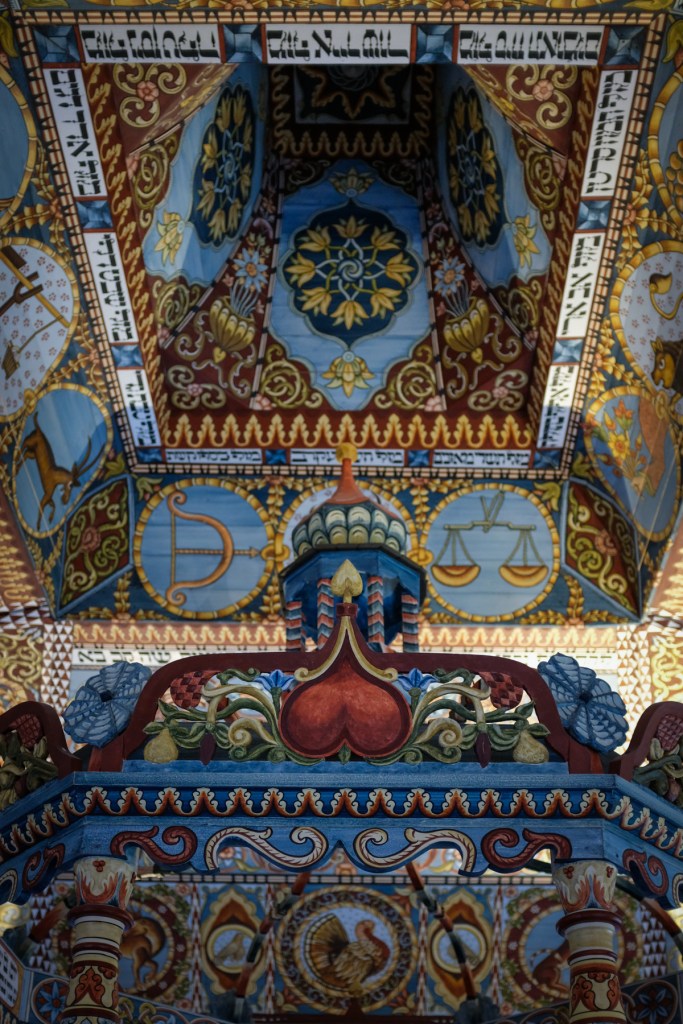
The initial wave of Jewish migration to Poland happened around the time of the First Crusade, from 1096 to 1099. Over the next 500 years, more arrived from Ashkenaz and even from as far away as Sefarad—Hebrew for the Iberian Peninsula. Most settled in the city, or shtot, next to a major trading route; others made their home in a smaller shtetl, often in the vicinity of dense forests. With easy access to inexpensive and abundant timber, life in the shtetl engendered something truly unique: the wooden synagogues that sprouted out of the mid-16th century Polish–Lithuanian Commonwealth are a rare example of folk art in Jewish history. Unlike the synagogues built before them, wooden synagogues did not adhere to any architectural tradition. Their ornate carvings and intricately painted interiors were a pure form of artistic expression. The majority of these structures did not survive the two world wars. Apart from a few reproductions and a handful of decaying husks in Lithuania and Latvia, there is almost no trace of their once radiant existence.
Against a millennium of Varsovian history, a weekend passes by faster than the flutter of an eye. Through the looking glass of the glossy metropolis, this wrinkled city of uncommon magnetism evokes an incessant stream of curiosity, understanding, and reverence.
 Gregory Gioro